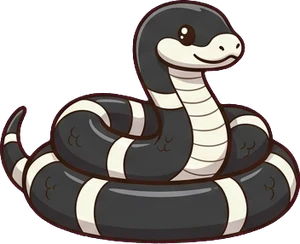
California Kingsnake care guide
Lampropeltis californiae · Care info checked against current care sheets in October 2026
Quick facts
| Scientific name | Lampropeltis californiae |
|---|---|
| Also called | Cal king |
| Care level | Beginner |
| Active | Crepuscular |
| Lives | Terrestrial |
| Adult size | 90 to 120 cm (35 to 47 in) |
| Lifespan | 15 to 25 years |
| Minimum enclosure (one adult) | 120 x 60 x 60 cm (47 x 24 x 24 inches) |
| Basking spot | 29 to 33°C (84 to 91°F) |
| Warm side | 27 to 30°C (81 to 86°F) |
| Cool side | 21 to 26°C (70 to 79°F) |
| Night | 20 to 24°C (68 to 75°F) |
| Humidity | 40 to 60% |
| UVB lighting | Optional (Ferguson zone 2) |
| Diet | Whole prey |
| Feeding, babies | every 5 to 7 days |
| Feeding, juveniles | every 7 to 10 days |
| Feeding, adults | every 10 to 14 days |
Overview
A bold, banded snake from the western United States with a huge appetite. Kingsnakes eat other snakes in the wild, so they must always live alone.
Enclosure
Provide at least 120 x 60 x 60 cm (47 x 24 x 24 inches) with hides on both ends and a burrowing substrate. Use secure locks, since kings are strong and persistent.
Heat, humidity and lighting
Warm a basking spot to about 29 to 33°C (84 to 91°F) with the cool side at about 21 to 26°C (70 to 79°F). Keep humidity around 40 to 60%. Low UVB is optional but beneficial.
Diet
Feed frozen-thawed rodents every 5 to 7 days for babies, every 7 to 10 days for juveniles, and every 10 to 14 days for adults. Kings are enthusiastic eaters, so watch for obesity.
Health
Watch for wheezing, stuck shed and regurgitation. Never house two kingsnakes together.
Handling
Young kings can be musky and nippy but usually settle with gentle handling. Wash hands before handling so you don't smell like food.
See a vet if you notice
Wheezing, stuck shed, regurgitation, bite wounds if housed with others.
Other languages: ČeštinaDeutschEspañolFrançaisBahasa IndonesiaItaliano日本語한국어NederlandsPolskiPortuguês (Brasil)SvenskaTürkçe简体中文