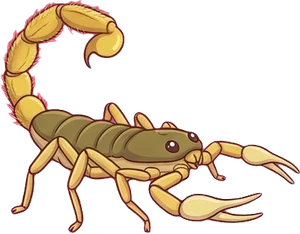
Desert Hairy Scorpion care guide
Hadrurus arizonensis · Care info checked against current care sheets in November 2026
Quick facts
| Scientific name | Hadrurus arizonensis |
|---|---|
| Also called | Giant desert hairy scorpion, Arizona desert hairy |
| Care level | Intermediate |
| Active | Nocturnal |
| Lives | Terrestrial / burrowing |
| Adult size | 12 to 15 cm (5 to 6 in) |
| Lifespan | 10 to 20 years |
| Minimum enclosure (one adult) | 45 x 30 x 30 cm (18 x 12 x 12 inches) |
| Warm side | 30 to 35°C (86 to 95°F) |
| Cool side | 24 to 28°C (75 to 82°F) |
| Night | 18 to 24°C (64 to 75°F) |
| Humidity | 20 to 40% |
| UVB lighting | Not needed |
| Diet | Insectivore |
| Feeding, babies | every 4 to 7 days |
| Feeding, juveniles | every 7 to 10 days |
| Feeding, adults | every 7 to 14 days |
Overview
North America's largest scorpion, tan with a dark back and fine hairs on its legs and tail, from the Sonoran and Mojave deserts. It's active, a strong digger and a big eater. It reaches 12 to 15 cm (5.9 in) and can live 10 to 20 years. The sting is mild to moderate, about like a bee's.
Enclosure
An adult needs about 45 x 30 x 30 cm (18 x 12 x 12 inches) with a secure, ventilated lid. Give it at least 15 cm (5.9 in) of a firm sand and clay mix it can dig tunnels in, a few flat rocks or cork bark resting on the substrate, and a small, shallow water dish.
Heat, humidity and lighting
Hot and dry: a warm side of 30 to 35°C (86 to 95°F) from a heat mat or a low-wattage lamp on a thermostat, a cooler side of 24 to 28°C (75 to 82°F), and nights down to about 18°C (64°F). Keep humidity low, 20 to 40%, but dampen the bottom of the substrate in one corner every couple of weeks so the burrow keeps its shape. No UVB needed.
Diet
A strong eater. Crickets, roaches and worms. Babies eat every 4 to 7 days, juveniles every 7 to 10 days, and adults every 1 to 2 weeks. Remove anything uneaten within a day.
Health
Scorpions molt about 6 to 7 times before they're adult, then stop. Before a molt they hide and refuse food: take out any live prey and leave them alone. Watch for a shriveled body, mites, mold, and a stuck molt. Mild venom stings feel like a bee sting, but allergic people should take any sting seriously.
Handling
Don't handle it: it's fast, nervous and stings readily. Do maintenance with long tongs and move it by guiding it into a cup.
See a vet if you notice
Shriveled body, lying on its back, a stuck molt, mites, damp or moldy substrate.
Other languages: ČeštinaDeutschEspañolFrançaisBahasa IndonesiaItaliano日本語한국어NederlandsPolskiPortuguês (Brasil)SvenskaTürkçe简体中文