Chinese Fire-bellied Newt care guide
Cynops orientalis · Care info checked against current care sheets in November 2026
Quick facts
| Scientific name | Cynops orientalis |
|---|---|
| Also called | Fire belly newt, oriental fire-bellied newt |
| Care level | Intermediate |
| Active | Crepuscular |
| Lives | Aquatic |
| Adult size | 6 to 10 cm (2 to 4 in) |
| Lifespan | 10 to 15 years |
| Minimum enclosure (one adult) | 60 x 30 x 30 cm (24 x 12 x 12 inches) |
| Water temperature | 15 to 22°C (59 to 72°F) |
| Water pH | 6.5 to 7.5 |
| UVB lighting | Not needed |
| Diet | Carnivore |
| Feeding, juveniles | every day |
| Feeding, adults | every 2 to 3 days |
Overview
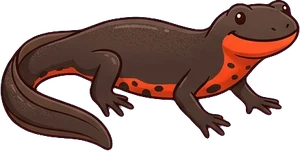
A small, black newt from China with a bright orange belly that warns predators it's toxic. Fire-bellied newts are calm and fun to watch, and they live 10 to 15 years in cool, clean water. The one thing they can't handle is warm water.
Enclosure
A pair needs a tank of at least 60 x 30 x 30 cm (24 x 12 x 12 inches) (about 45 liters) with 20 to 25 cm (9.8 in) of water, a gentle filter and a land area or floating platform covering about a quarter of the surface. Cover the tank fully; newts escape through small gaps. Cycle the tank for 2 to 4 weeks first.
Heat, humidity and lighting
Keep the water at 15 to 22°C (59 to 72°F) and never above 24°C (75°F) for long. Most homes need no heater, and many need a chiller or a cool room in summer. Keep pH at 6.5 to 7.5, ammonia and nitrite at zero, and nitrate low, with about 30% of the water changed every week. No UVB is needed.
Diet
Feed bloodworms, chopped earthworms and blackworms. Juveniles eat every day and adults about 3 times a week. Take out anything uneaten after 20 minutes. Avoid mealworms and meat.
Health
Warm water is the main cause of illness and fungus. Watch for fuzzy patches, red skin, floating and a newt that won't eat or stays out of the water. Clean water fixes most problems.
Handling
Their skin makes a toxin, so handle as little as possible. Wash your hands before and after, keep fingers away from your eyes and mouth, and use a soft net to move them.
See a vet if you notice
Floating and unable to dive, fuzzy white patches, red or sore skin, not eating, staying out of the water all the time.
Other languages: ČeštinaDeutschEspañolFrançaisBahasa IndonesiaItaliano日本語한국어NederlandsPolskiPortuguês (Brasil)SvenskaTürkçe简体中文