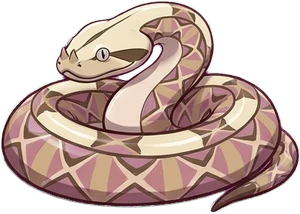
Gaboon Viper care guide
Bitis gabonica · Care info checked against current care sheets in November 2026
Quick facts
| Scientific name | Bitis gabonica |
|---|---|
| Also called | Gaboon adder, West African Gaboon viper |
| Care level | Advanced |
| Active | Nocturnal |
| Lives | Terrestrial |
| Adult size | 120 to 180 cm (47 to 71 in) |
| Lifespan | 15 to 20 years |
| Minimum enclosure (one adult) | 120 x 60 x 45 cm (47 x 24 x 18 inches) |
| Basking spot | 29 to 31°C (84 to 88°F) |
| Warm side | 27 to 29°C (81 to 84°F) |
| Cool side | 24 to 26°C (75 to 79°F) |
| Night | 22 to 24°C (72 to 75°F) |
| Humidity | 60 to 80% |
| UVB lighting | Optional (Ferguson zone 2) |
| Diet | Whole prey |
| Feeding, babies | every 10 to 14 days |
| Feeding, juveniles | every 14 to 21 days |
| Feeding, adults | every 21 to 42 days |
Overview
A huge, heavy viper from the rainforests of central and West Africa, with a leaf-litter pattern and the longest fangs of any snake. Adults are usually 1.2 to 1.8 meters and very heavy. It's famously calm, but a bite is a medical emergency and antivenom is hard to get, so it's only for very experienced venomous keepers with permits. They live 15 to 20 years.
Enclosure
An adult needs at least 120 x 60 x 45 cm (47 x 24 x 18 inches) of floor. Height matters less, since it doesn't climb. Use a locking enclosure with a shift box, deep leaf litter over soil, a big hide and a heavy water bowl. Label the enclosure as venomous.
Heat, humidity and lighting
Give a basking spot of 29 to 31°C (84 to 88°F), a warm side of 27 to 29°C (81 to 84°F) and a cool end of 24 to 26°C (75 to 79°F), with nights at 22 to 24°C (72 to 75°F). Keep humidity at 60 to 80%. Low UVB is optional.
Diet
Feed frozen-thawed rats with long tongs. Babies eat every 10 to 14 days, growing snakes every 2 to 3 weeks, and adults every 3 to 6 weeks. Gaboons get fat easily, so keep meals modest and spaced out.
Health
Watch for obesity, mouth infections, stuck shed, mites and wheezing. Line up a venomous-savvy vet and an antivenom plan before you buy one.
Handling
Calm doesn't mean safe. Move it only with a hook or into a tube or shift box. Never free-handle it. Work it with a snake hook and tongs, from outside striking range, and keep the enclosure locked.
See a vet if you notice
Obesity, mouth infections, stuck shed, mites, respiratory infection.
Other languages: ČeštinaDeutschEspañolFrançaisBahasa IndonesiaItaliano日本語한국어NederlandsPolskiPortuguês (Brasil)SvenskaTürkçe简体中文