Red-footed Tortoise care guide
Chelonoidis carbonarius · Care info checked against current care sheets in November 2026
Quick facts
| Scientific name | Chelonoidis carbonarius |
|---|---|
| Also called | Redfoot tortoise, cherry head red-footed tortoise |
| Care level | Intermediate |
| Active | Diurnal |
| Lives | Terrestrial |
| Adult size | 30 to 45 cm (12 to 18 in) |
| Lifespan | 50 to 60 years |
| Minimum enclosure (one adult) | 240 x 120 x 60 cm (94 x 47 x 24 inches) |
| Basking spot | 32 to 35°C (90 to 95°F) |
| Warm side | 27 to 29°C (81 to 84°F) |
| Cool side | 24 to 27°C (75 to 81°F) |
| Night | 20 to 23°C (68 to 73°F) |
| Humidity | 70 to 90% |
| UVB lighting | Required (Ferguson zone 2) |
| Diet | Omnivore |
| Feeding, juveniles | every day |
| Feeding, adults | every 1 to 2 days |
Overview
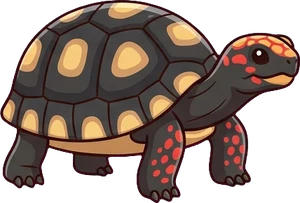
A colorful forest tortoise from South America, with a dark shell, golden patches and red scales on the legs and head. Red-foots are friendly and food-motivated, love humidity and eat a mix of greens, fruit and a little protein. They get big and live 50 years or more, so plan for a large enclosure.
Enclosure
An adult needs at least 240 x 120 cm (47.2 in) of floor, and bigger is better. Use a deep, damp substrate like cypress mulch or a soil mix, with hides, leaf litter, plants and a large shallow water dish they can soak in. Closed-chamber enclosures hold the high humidity they need.
Heat, humidity and lighting
Give a basking spot of 32 to 35°C (90 to 95°F), a warm side of 27 to 29°C (81 to 84°F), a cool side of 24 to 27°C (75 to 81°F) and nights at 20 to 23°C (68 to 73°F) (keep babies a little warmer at night). Humidity should stay high, about 70 to 90%. UVB is required, aiming for a moderate level (Ferguson zone 2) over the basking area.
Diet
Feed daily while young and about every other day once grown, so they don't get overweight. Aim for roughly half fruits, flowers and leaves, a third leafy greens and vegetables, and about a tenth protein like earthworms, insects or mushrooms. Dust with calcium most meals and a multivitamin once a week.
Health
Watch for runny noses and wheezing (often too cold or too dry), swollen eyes, shell rot and lumpy shell growth from low humidity. Weigh monthly. A soak in shallow warm water a few times a week helps keep young tortoises hydrated.
Handling
Red-foots are usually calm and many learn to come for food. Lift with both hands under the shell and keep them low; they're heavy as adults. Let them explore rather than holding them for long, and wash your hands after.
See a vet if you notice
Swollen or closed eyes, runny nose or wheezing, a soft or pyramiding shell, shell rot, not eating.
Other languages: ČeštinaDeutschEspañolFrançaisBahasa IndonesiaItaliano日本語한국어NederlandsPolskiPortuguês (Brasil)SvenskaTürkçe简体中文