Tiger Salamander care guide
Ambystoma tigrinum · Care info checked against current care sheets in November 2026
Quick facts
| Scientific name | Ambystoma tigrinum |
|---|---|
| Also called | Eastern tiger salamander, barred tiger salamander |
| Care level | Beginner |
| Active | Nocturnal |
| Lives | Terrestrial / burrowing |
| Adult size | 18 to 30 cm (7 to 12 in) |
| Lifespan | 12 to 20 years |
| Minimum enclosure (one adult) | 60 x 45 x 30 cm (24 x 18 x 12 inches) |
| Warm side | 18 to 23°C (64 to 73°F) |
| Cool side | 13 to 18°C (55 to 64°F) |
| Night | 10 to 18°C (50 to 64°F) |
| Humidity | 50 to 80% |
| UVB lighting | Recommended (Ferguson zone 1) |
| Diet | Carnivore |
| Feeding, juveniles | every 1 to 2 days |
| Feeding, adults | every 2 to 4 days |
Overview
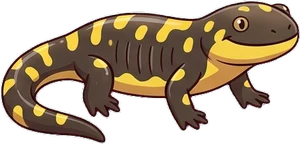
A big, chunky salamander from North America with bold yellow blotches on black. Tiger salamanders are hardy, hungry and surprisingly bold for an amphibian, and they live 15 years or more. They love to burrow and stay cool.
Enclosure
One adult needs at least 60 x 45 x 30 cm (24 x 18 x 12 inches), and more floor space is better. Use at least 10 cm (3.9 in) of a damp, diggable soil like coconut fiber or topsoil (no peat moss), with leaf litter, a hide and a shallow water dish; they're poor swimmers, so no deep water. Keep them alone.
Heat, humidity and lighting
Keep them cool: a warm side of 18 to 23°C (64 to 73°F) and a cool side of 13 to 18°C (55 to 64°F), with nights at 10 to 18°C (50 to 64°F), and never above 24°C (75°F). Most homes need no heat at all. Keep humidity at 50 to 80%. Low UVB is recommended, with plenty of shade.
Diet
Feed crickets, roaches, earthworms, silkworms and hornworms, smaller than the salamander's head. Feed juveniles every day or two and adults 2 or 3 times a week, as much as it eats in about 10 minutes. Dust with calcium and vitamins, and cut back if it gets chubby.
Health
Overheating, dirty water and dry soil cause most problems. Use dechlorinated water for the dish and misting, and watch for red skin, bloating and cloudy eyes.
Handling
Best as a hands-off pet: oils and salt on our skin can hurt theirs. Feed with tongs, since a hungry salamander can bite hard. If you must move one, wear wet gloves and use a damp container.
See a vet if you notice
Red or sore skin, cloudy eyes, bloating, not eating, sitting out in the open all the time.
Other languages: ČeštinaDeutschEspañolFrançaisBahasa IndonesiaItaliano日本語한국어NederlandsPolskiPortuguês (Brasil)SvenskaTürkçe简体中文